

Your air conditioner has failed twice in three years. You keep noticing a faint smell like sulfur or rotten eggs that no one else on your street seems to have. Your copper pipes have developed unusual dark discoloration. Any of these on their own might point to an isolated problem. All three together, in a home built or renovated between 2004 and 2008, point to one of the most serious residential construction defects of the past two decades: reactive Chinese drywall.
If you suspect it, acting quickly matters. The longer reactive drywall off-gases inside a home, the more extensive the damage to wiring, HVAC, and plumbing becomes, and the more expensive the only real solution gets.
What Chinese Drywall Is and Why It Was Used
How did reactive Chinese drywall end up in American homes?
Between 2001 and 2009, a combination of the American housing boom and the demand for rapid reconstruction following the 2004 and 2005 hurricane seasons created a significant shortage of domestically manufactured drywall. Builders turned to Chinese imports to fill the gap. An estimated 500 million pounds of Chinese-manufactured drywall entered the United States during this period, used in the construction or renovation of an estimated 100,000 or more homes.
A portion of that imported material was defective. It contained elevated concentrations of sulfur compounds, including strontium sulfide and iron sulfide, as byproducts of manufacturing processes that used coal combustion waste known as fly ash. Under the warm, humid conditions common in southern states, these compounds off-gas continuously as hydrogen sulfide, sulfur dioxide, and carbon disulfide. These gases have a characteristic rotten-egg odor and are corrosive to copper and other metals.
The Lawrence Berkeley National Laboratory, working with the U.S. Consumer Product Safety Commission, found that defective Chinese drywall samples produced hydrogen sulfide at emission rates up to 100 times higher than domestic drywall samples. That is not a marginal difference. It is a material that behaves chemically unlike domestic drywall in a way that has permanent consequences for the systems inside the walls.
Which Homes Are at Risk and Where
Is Chinese drywall only a problem in Florida and the Gulf Coast?
The highest concentrations of affected homes are in Florida, Louisiana, Mississippi, Alabama, and Virginia, states that experienced the most intense residential construction activity during the affected import window and that have the warm, humid conditions that accelerate sulfur off-gassing. Florida alone accounts for the majority of documented cases. But confirmed Chinese drywall has been identified in homes across 37 or more states.
Your home is most likely to be affected if it was built new or substantially renovated between 2004 and 2008, particularly if the construction took place in a hurricane recovery area or during a period of high local building activity. Homes built before 2004 or after 2009 have a substantially lower risk, since the import window was concentrated in that period.
Condominium buildings, townhouse developments, and large subdivisions are disproportionately represented in affected home inventories because large-volume builders were more likely to source materials from bulk importers who had purchased Chinese-manufactured product. Custom homes built by small local builders using domestic supply chains carry lower risk, though they are not exempt if the contractor sourced materials from a bulk supplier during the shortage period.
The Warning Signs: What Chinese Drywall Looks and Smells Like
What are the specific signs that a home may contain reactive Chinese drywall?
The signs of reactive drywall are distinctive and, when multiple indicators are present simultaneously, are highly diagnostic. A home with one of these signs may have an unrelated explanation. A home with three or four of them, built during the affected period, should be tested promptly.
| Warning Sign | What to Look For | Why It Happens |
|---|---|---|
| Persistent sulfur odor | Rotten-egg or sulfurous smell that is stronger in warm weather and does not respond to cleaning or ventilation | Hydrogen sulfide and related gases off-gassing from drywall; intensity increases with temperature and humidity |
| Blackened AC evaporator coils | Copper coils inside the air handler unit have turned black and powdery rather than remaining copper-colored | Most reliable single diagnostic indicator; copper coils are first component exposed to circulating air and corrode earliest |
| Frequent AC failures | HVAC system requires repeated service calls or early replacement; evaporator coil failure is a recurring issue | Corrosive gases destroy copper coils; replacement coils corrode again quickly if drywall is not removed |
| Blackened copper wiring | Electrical wire connections, breaker terminals, and exposed copper visible at outlets have dark discoloration | Hydrogen sulfide corrodes copper; creates resistance in connections and poses fire hazard |
| Rapid silver tarnishing | Silver jewelry, silverware, and mirrored surfaces tarnish faster than normal, often within weeks | Sulfur compounds in the air react with silver in the same way as with copper |
| Unexplained health symptoms | Recurring headaches, eye irritation, respiratory symptoms, nosebleeds, or throat irritation that improve when away from home | Exposure to airborne sulfur compounds; symptoms are most pronounced in children, elderly, and those with respiratory conditions |
| Early appliance failure | Refrigerators, dishwashers, computers, televisions, and other electronics failing earlier than expected | Corrosive gases attack metal contacts and circuit components throughout the home |
The AC evaporator coil is the most reliable early diagnostic check. If you have access to the air handler unit, remove the access panel and look at the copper coils. On a home without reactive drywall, these coils remain copper-colored. On a home with reactive drywall, they develop black powdery corrosion, often within one to two years of installation in a humid climate. If you see blackened coils in a home built during the affected period, stop there and schedule professional testing before replacing the coil, because the replacement will corrode again if the drywall is not addressed first.
The Fire Hazard: The Risk That Gets Underreported
Does Chinese drywall create a fire risk in addition to health concerns?
Yes, and this is the consequence most coverage of Chinese drywall does not emphasize clearly enough. The sulfur compounds emitted by reactive drywall corrode copper wiring at connection points throughout the home, including at outlets, switches, junction boxes, circuit breakers, and panel connections. Corroded connections create electrical resistance. Resistance generates heat. Heat at an electrical connection is a fire ignition risk, particularly within wall cavities where the heat is enclosed and insulation is nearby.
Smoke detectors and carbon monoxide detectors in affected homes are also at risk. Their circuit contacts corrode, which can cause them to malfunction or fail without the homeowner’s knowledge. Replacing these devices while reactive drywall remains in the walls is a short-term measure, because the replacements will corrode again. The only permanent solution to the fire risk, as with the health and systems damage, is full drywall removal.
Why Partial Fixes Do Not Work
Can you encapsulate or seal Chinese drywall instead of removing it?
No. Surface treatments, sealants, encapsulation products, and primer coats cannot penetrate the drywall panel and neutralize the sulfur compounds embedded in the gypsum core. The gas emissions originate from inside the material, not from the surface. Painting over the wall or sealing the surface reduces air contact marginally but does not stop off-gassing in any meaningful or lasting way.
The expert and regulatory consensus on this point is unambiguous. The only effective remediation for a home with reactive Chinese drywall is complete removal of all affected drywall down to the framing, combined with inspection and replacement of all corroded copper systems. Federal court rulings in Chinese drywall class action litigation have consistently confirmed that appropriate remediation requires gutting the structure to the studs, because localized replacement leaves reactive material adjacent to new construction, and the gases continue to corrode replaced components.
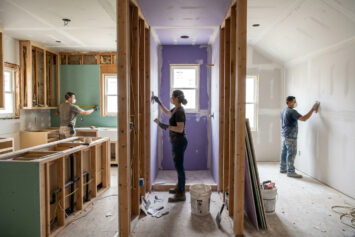
Most experienced drywall contractors who have worked on Chinese drywall remediation describe the scope as a whole-house renovation rather than a repair. All drywall is removed. All wiring is inspected and in most cases replaced. HVAC systems are fully replaced. Plumbing fittings and fixtures are assessed. The home is then rebuilt from the framing out with new materials.
What Full Remediation Costs and What Insurance Covers
How much does Chinese drywall remediation cost, and does insurance pay for it?
Full remediation costs are substantial and vary by home size, geographic market, and the extent of systems damage when work begins. Published estimates from remediation contractors and court proceedings consistently place average remediation costs between $30,000 and $100,000 per home, with larger homes or those with severe copper corrosion reaching well beyond that range. Lennar Homes, one of the builders implicated in affected Florida properties, reported spending approximately $100,000 per home on its voluntary remediation program.
Standard homeowners insurance policies generally do not cover Chinese drywall remediation. Insurers have argued that the damage falls outside coverage as a manufacturing defect rather than a sudden accidental loss. Some builder warranty programs covered remediation costs for homes built during the affected period, though those programs have largely closed out as litigation settled. Homeowners who believe their builder was responsible for using Chinese drywall should consult with an attorney familiar with construction defect claims in their state.
One meaningful financial resource that is underutilized: the IRS has provided tax relief for homeowners affected by toxic Chinese drywall installed between 2001 and 2009, allowing them to claim a casualty loss deduction for remediation costs. Confirm current eligibility and documentation requirements with a tax professional, as the treatment of this deduction has evolved through guidance updates.
How to Confirm Whether Your Home Is Affected
What tests confirm the presence of Chinese drywall?
Confirmation requires a combination of physical inspection and laboratory testing. A qualified home inspector or industrial hygienist familiar with Chinese drywall can perform an initial visual assessment, looking specifically at AC evaporator coil condition, wiring discoloration, and any visible markings on drywall boards that indicate Chinese manufacture.
Laboratory confirmation typically involves collecting drywall samples, including the back paper facing and core material from multiple locations in the home, and submitting them for testing of sulfur compound content. The CPSC has published guidance on sampling protocols. Air quality testing can also measure hydrogen sulfide levels in the home environment.
Visual inspection of AC coils alone is often sufficient to indicate a high probability of reactive drywall in homes built during the affected period. A licensed inspector who examines blackened coils and other corrosion indicators can provide enough documentation to support next steps, including insurance claims, builder outreach, or legal consultation.
When to Call a Professional Immediately
If your home was built or substantially renovated between 2004 and 2008, do not wait on any of the following conditions before scheduling professional inspection:
- A sulfurous or rotten-egg odor that persists in the home regardless of cleaning or ventilation
- A repeated pattern of HVAC failures, particularly evaporator coil failures on systems that should be relatively new
- Any visible black powdery corrosion on copper wiring, pipe fittings, or AC coils
- Silver items tarnishing significantly faster than normal
- Household members experiencing recurring respiratory symptoms, headaches, or eye irritation that improve when away from the home
- Any combination of these factors occurring simultaneously in the same home
Continued exposure while reactive drywall remains in the home allows the corrosion damage to deepen, increasing the scope and cost of eventual remediation. Getting a confirmed assessment is the essential first step, even if full remediation is not immediately possible.
Find a Drywall Contractor Qualified for Remediation Work
Chinese drywall remediation is a complete gut-and-rebuild project. The drywall contractor you hire needs experience with full-scope removal and replacement, the ability to coordinate with electrical and HVAC trades, and the professional standing to document the work for insurance and legal purposes.
DrywallProCenter.com connects homeowners with verified drywall professionals across the country. Search by zip code, compare contractor profiles, and request quotes from multiple pros in one place. If you suspect Chinese drywall, finding a qualified contractor with remediation experience starts here.
Recent Drywall Articles
- Drywall Cost by Room: Kitchen, Bathroom, Bedroom Compared
 You are trying to budget for a renovation and you need a rough number for each room. The challenge is that drywall pricing is not consistent across room types. A … Read more
 - What Insurance Should My Drywall Contractor Have?You asked a contractor whether they are insured and they said yes. That answer, on its own, protects you almost not at all. There are multiple types of insurance a … Read more
- How to Get Multiple Drywall Bids and Actually Compare ThemYou have three quotes and the numbers are all over the place. One comes in at $1,900, one at $2,700, and one at $3,400. The instinct is to assume the … Read more
- What to Expect on Day One When Your Drywall Contractor ArrivesThe contractor is scheduled to arrive at 8 a.m. and you are not sure what is about to happen in your house. Will they start immediately or spend the morning … Read more
- Red Flags to Watch for When Hiring a Drywall ContractorYou have a few contractor quotes in hand and one of them is significantly cheaper than the others. Or a contractor showed up unsolicited after the storm last week and … Read more
- How to Read a Drywall Contractor’s Quote Without Getting BurnedYou have three quotes in hand and they are not close to each other. One comes in at $1,800, one at $2,600, and one at $3,100 for what appears to … Read more


This article was drafted with the assistance of AI and has been reviewed and edited by our editorial team for accuracy and quality.